
Parallel Letters/Parallel'noe pis'mo
(Parallel texts in English and Russian)
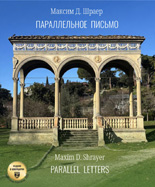
Parallel Letters/Parallel'noe pis'mo
(parallel texts in English and Russian)
by Maxim D. Shrayer
©2025 Maxim D. Shrayer, 120 pp.
Sandermoen Publishing, 2025
ISBN (paper) 978-3-03974-052-9
ISBN (epub) 978-3-03974-066-6
ISBN (pdf) 978-3-03974-0680
Order from the publisher/
Заказать у издателя
eBook
Read a sample/Прочитать образец
View book trailer
Praise for Parallel'noe pis'mo/Parallel Letters
Parallel Letters by the bilingual Russian-American writer Maxim D. Shrayer is a new word in literature. This collection of poems showcases twin texts that were born from the same source but live in different linguistic and cultural spaces—Russian and English. The poems reflect each other like two mirrors but also refract each other, as they are mirrors of history and culture. Each sprouting in its own linguistic soil, Shrayer's poetic texts whisper reverently and tenderly about the divine creator and scream about human suffering. In them, pain and nostalgia neighbor happiness and love. Shrayer's new book features poems written in 2020–2024. At the center of his world are immigrants from the former USSR now living in the USA, Israel, and Europe. Texts about the war in Ukraine and the war in Israel hold a special place in the book. Shrayer's verse is marked by a passionate commitment to justice and by formal originality. This book will be of interest to a wide audience of readers.
The title of Maxim D. Shrayer's bilingual collection Parallel'noe Pis'mo/Parallel Letters refers not only to the letter itself but to writing—its style and the language that defines its nature. In different ways, writing in two languages is building and rebuilding two worlds. To write is to awaken memory, and memory is not just words, not just spirit, but also scent, taste, matter, flesh. The flesh that time itself transforms in the flow of life, carrying one's own people, one's own friends, one's own lineage. The parallel letters that Maxim D. Shrayer sends to all of us are the words that build and rebuild both his own split world and our own multiple worlds. The former USSR, America, Israel, Russia, and Ukraine are the places from where the letters were sent to the poet, and where he now sends the letters back. Moscow, Leningrad, Jerusalem, Kamianets-Podilskyi, and Boston are the poet's cities. The places experienced and now reconstructed through memory are Shrayer's addresses. The father calls the son, the son answers his father in rhymed and free verse, in terza rima and couplets… This is not only a collection of letters, it's a voice of memory.
—Stefano Garzonio, Professor Emeritus, Università di Pisa, bilingual poet in Russian and Italian, literary translator
Owing to its strong voice and ornate mosaic of images, the poetry of Maxim D. Shrayer sometimes makes one forget that it grows out of several literary traditions, to which the experience of the poet-observer, poet-traveler, and poet-researcher is applied. There are many names and encounters with the past in this book, and there are also biographies told through a few strokes of the pen. The poet is steeped in life's history, and his poems reveal a depth of recollection. The bilingualism of Parallel'noe pis'mo/Parallel Writing underscores the multiple reflections of the worlds where the poet's soul had found refuge and where his analytical talent had been formed.
—Fedor Poljakov, Professor, University of Vienna, historian of Russian émigré literature
«Параллельное письмо» двуязычного русско-американского писателя Максима Д. Шраера — это новое слово в литературе. В этом сборнике стихотворений представлены тексты-близнецы, которые рождались вместе, а живут в разных языковых и культурных пространствах — русском и английском. Стихи отражаются друг в друге, как в зеркале, но и преломляются в нём, поскольку это зеркало истории и культуры. Прорастая каждый в своей языковой почве, поэтические тексты Шраера то трепетно и нежно говорят о божественном, то плачут и кричат о человеческих страданиях. В них — боль и ностальгия, счастье и любовь. В новую книгу Шраера вошли стихотворения 2020–2024 годов, в которых действуют эмигранты из бывшего СССР, живущие в США, Израиле и странах Европы. Особое место в ней занимают тексты, связанные с войной против Украины и против Израиля. Стихам Шраера характерны страстность и выразительность, политическая бескомпромиссность и новаторство формы. Книга предназначена для широкого круга читателей.
Название двуязычной книги Максима Д. Шраера Парелленое письмо/Parallel Letters относится не только к отправляемому письму, но к письму как таковому — стилю и языку, определяющим природу текста. Творение на двух языках есть становление и восстановление двух миров. Когда мы пишем, мы пробуждаем память, но память это не только слова, не только дух, но и вкус, материя, плоть. Плоть, которую само время преображает, унося вниз по течению жизни родных людей, родной язык. Параллельные письма, которые Шраер отправляет всем нам, строят и перестраивают его собственный расщепленный мир и наши множественные миры. Бывший СССР, Америка, Израиль, Россия и Украина — вот места, откуда поэту приходили письма, и теперь он сам отвечает на эти письма. Москва, Ленинград, Иерусалим, Каменец-Подольск, Бостон — вот города поэта. Отец пишет сыну, сын отвечает отцу рифмованным и свободным стихом, терцинами и героическими куплетами… Это не только собрание писем, это голос памяти.
—Стефано Гардзонио, почетный профессор Пизанского университета, двуязычный русско-итальянский поэт, переводчик
Поэзия Максима Д. Шраера благодаря своему сильному голосу и необычной мозаике образов порой заставляет забыть о том, что вырастает она на почве нескольких литературных традиций, к которой примешивается опыт наблюдателя, путешественника, исследователя. Здесь много имен, встреч с прошлым, рассказанных в нескольких штрихах биографий. Автор погружен в историчность жизни, и в его стихотворениях открывается глубина воспоминаний. Двуязычие сборника «Параллельное письмо/Parallel Writing» подчеркивает множественность отражений тех миров, которые дали приют его душе и воспитали его аналитический талант.
—Федор Поляков, профессор Венского университета, историк литературы русской эмиграции